


The Pahadi Story Honey: proof-led product launch, packaging and D2C for Himalayan honeydew honey
Proof, before the first spoon.
Honey is a category built on adjectives. Pure, raw, natural, unprocessed. None of them can be tasted at the shelf, and most of them cannot be checked after the jar is open. The Pahadi Story was already a Himalayan brand. Honey was the first time the brand had to survive a laboratory rather than a tasting note.
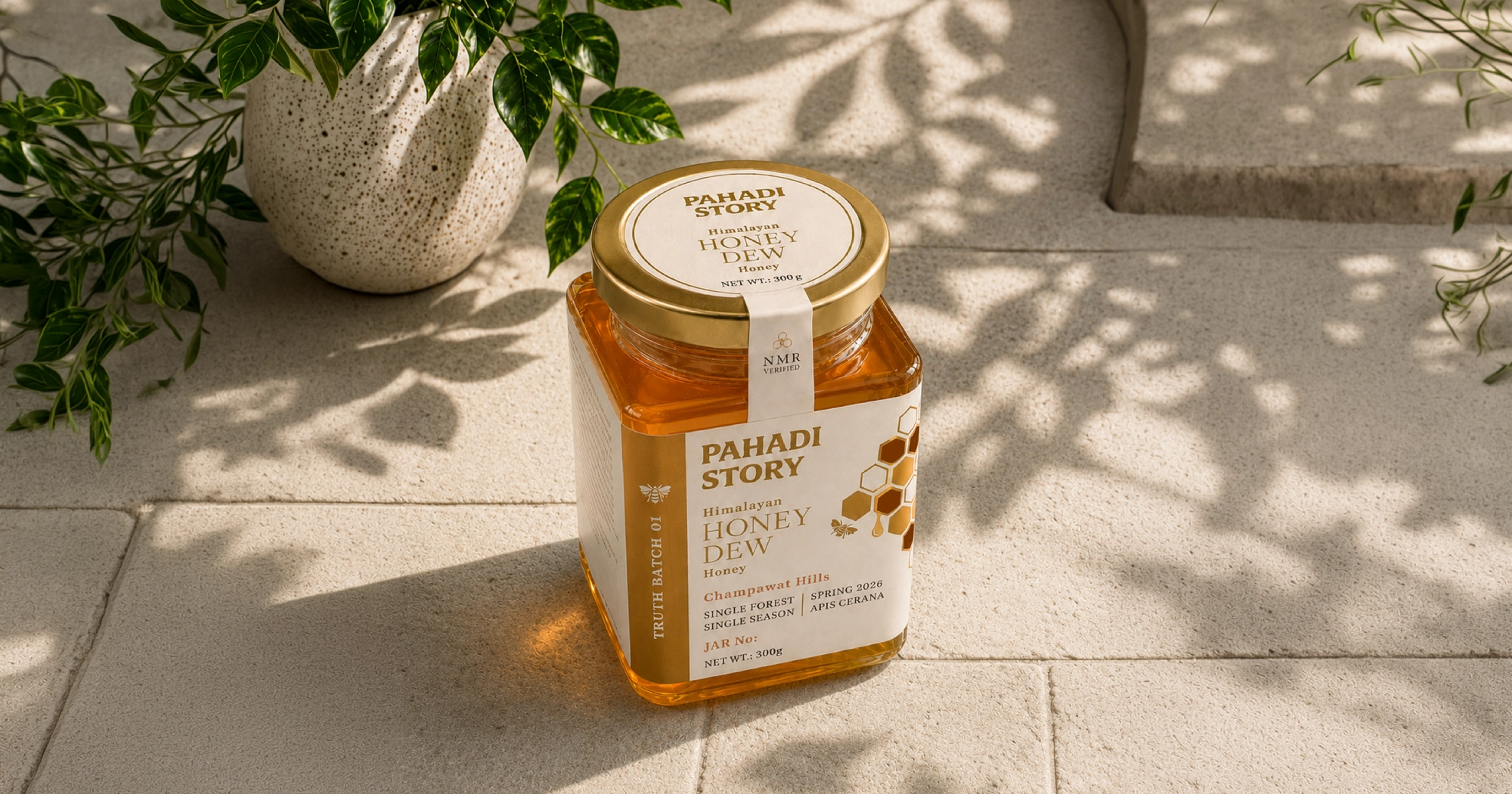
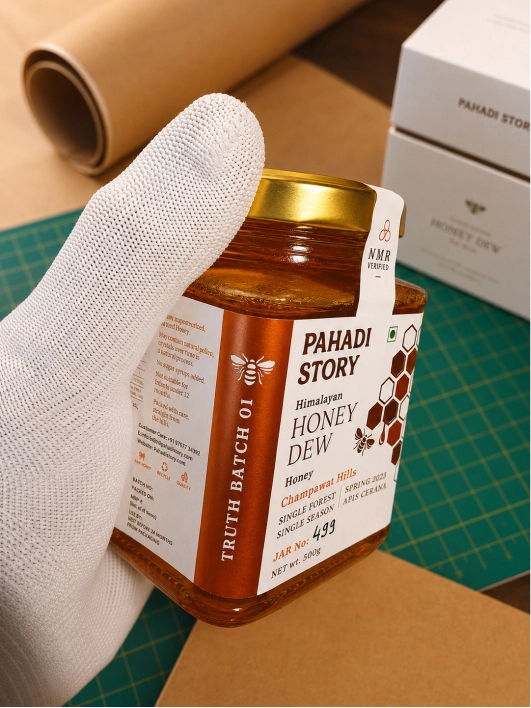
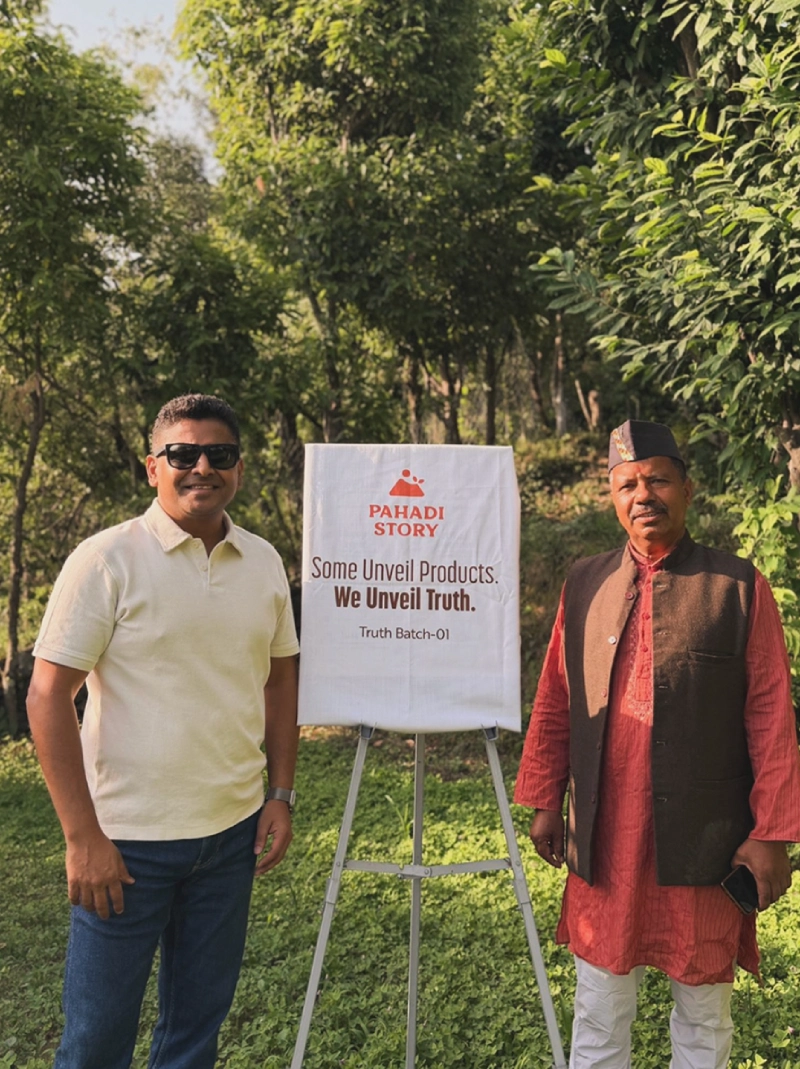
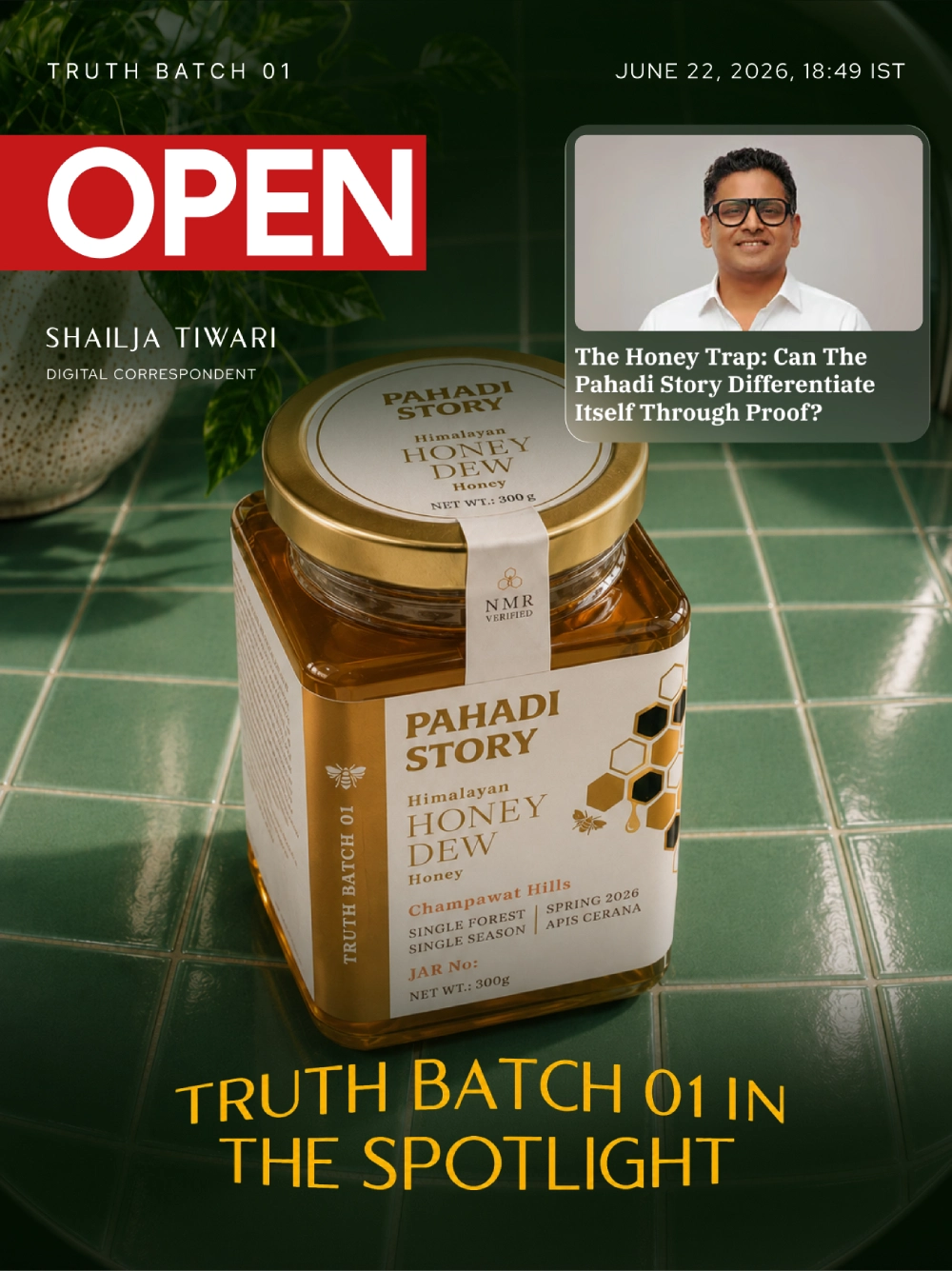
Truth Batch 01 is Himalayan honeydew honey from the Champawat hills, single forest, single season, Apis cerana. Independent profiling in India and Germany, published batch by batch. The proof is the product. The jar is how you take it home.
- Claims framework
- Packaging system
- Label architecture
- Product page
- Launch film
- Social system
- Waitlist
- Press kit
- Gift box
- Marketplace assets

.webp)
.webp)
.webp)
.webp)
.webp)
.webp)
.webp)
.webp)
.webp)
What the first batch taught us.
Grade the claim before the pack
Every line went through three tiers before it was written: traditional use, verified composition, and claims that are not permitted at all. If it cannot be graded, it does not go on the pack.
The label carries the lab
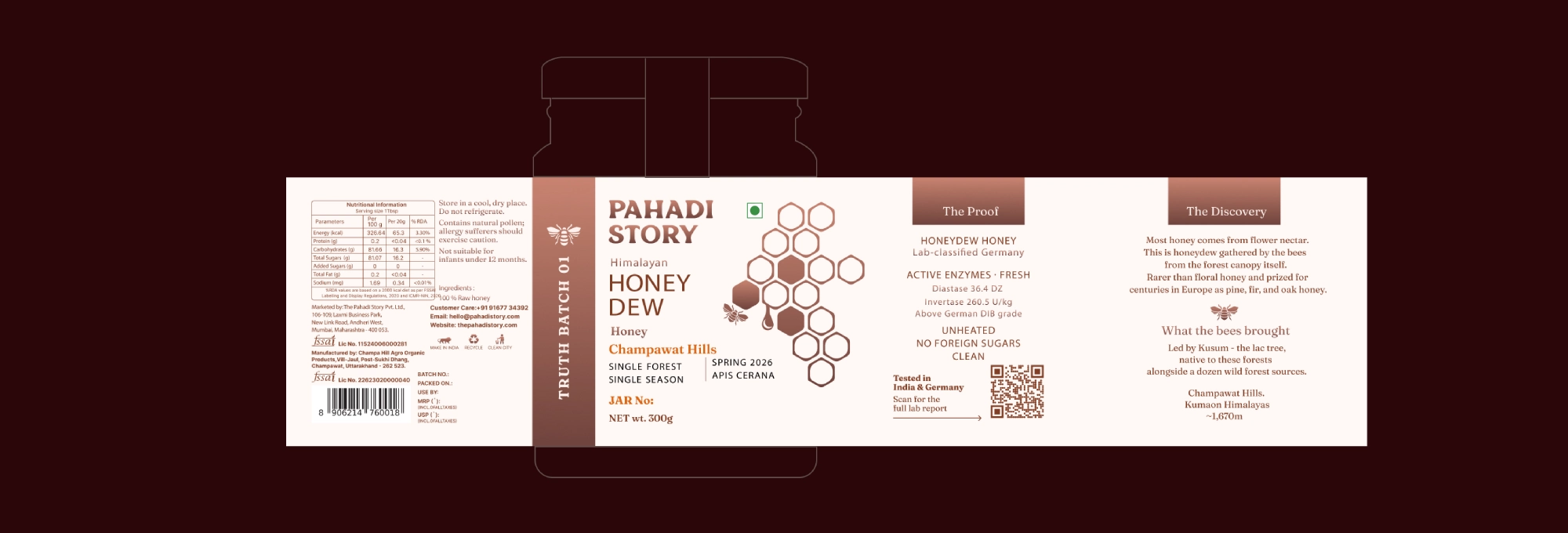
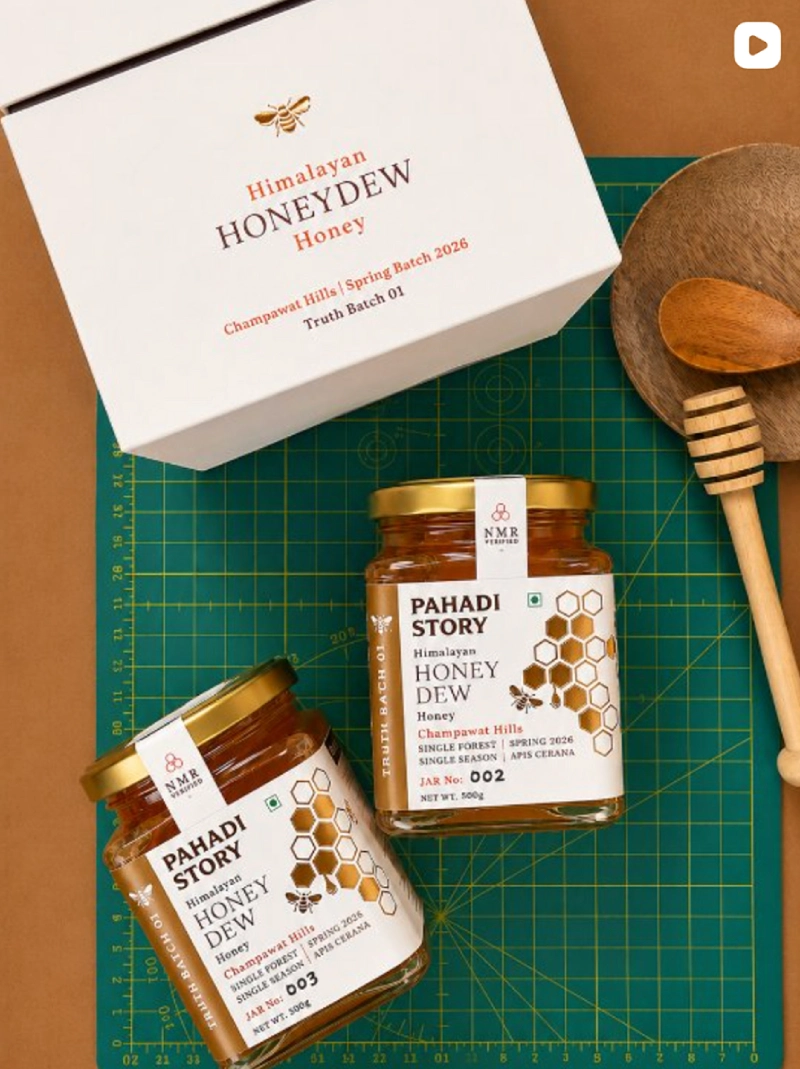
Honeydew honey from Champawat, Truth Batch 01, jar number, forest and season on the face. The dieline holds the proof, so a shopper who turns the pack gets the same story the page tells. 276 ways the batch could have failed. It passed every one.
The page is the report
Most honey pages sell a feeling and hide the certificate in a footer. This one inverts that. Origin, season, species and the batch number sit where the adjectives used to. If the page cannot survive the report, the brand cannot survive the second batch.
Scarcity you can explain
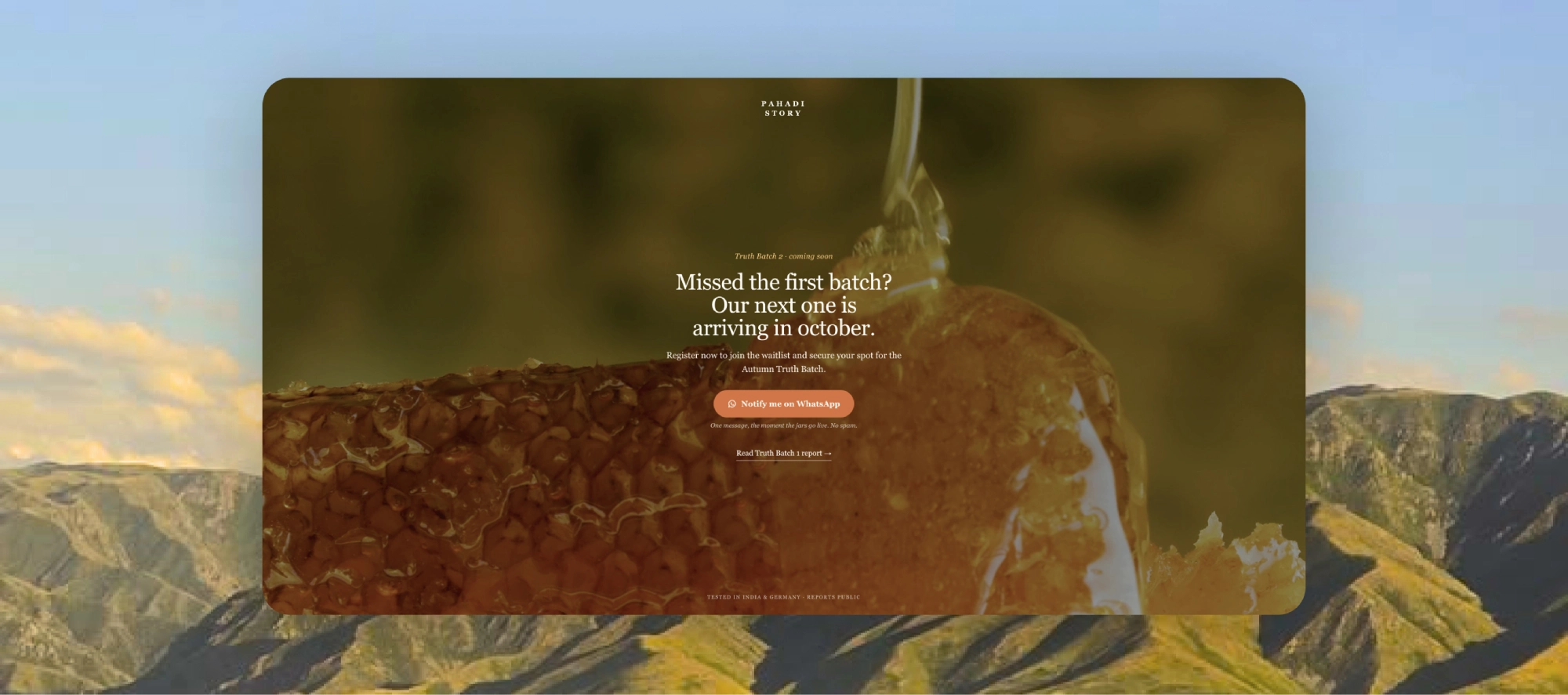
A limited first batch is a constraint, not a campaign trick. When Truth Batch 01 sold through, the next honest object was a waitlist for the autumn cut. Scarcity that you can explain is credibility. Scarcity you invent is a sale.
.webp)
.webp)
.webp)
.webp)
.webp)
.webp)